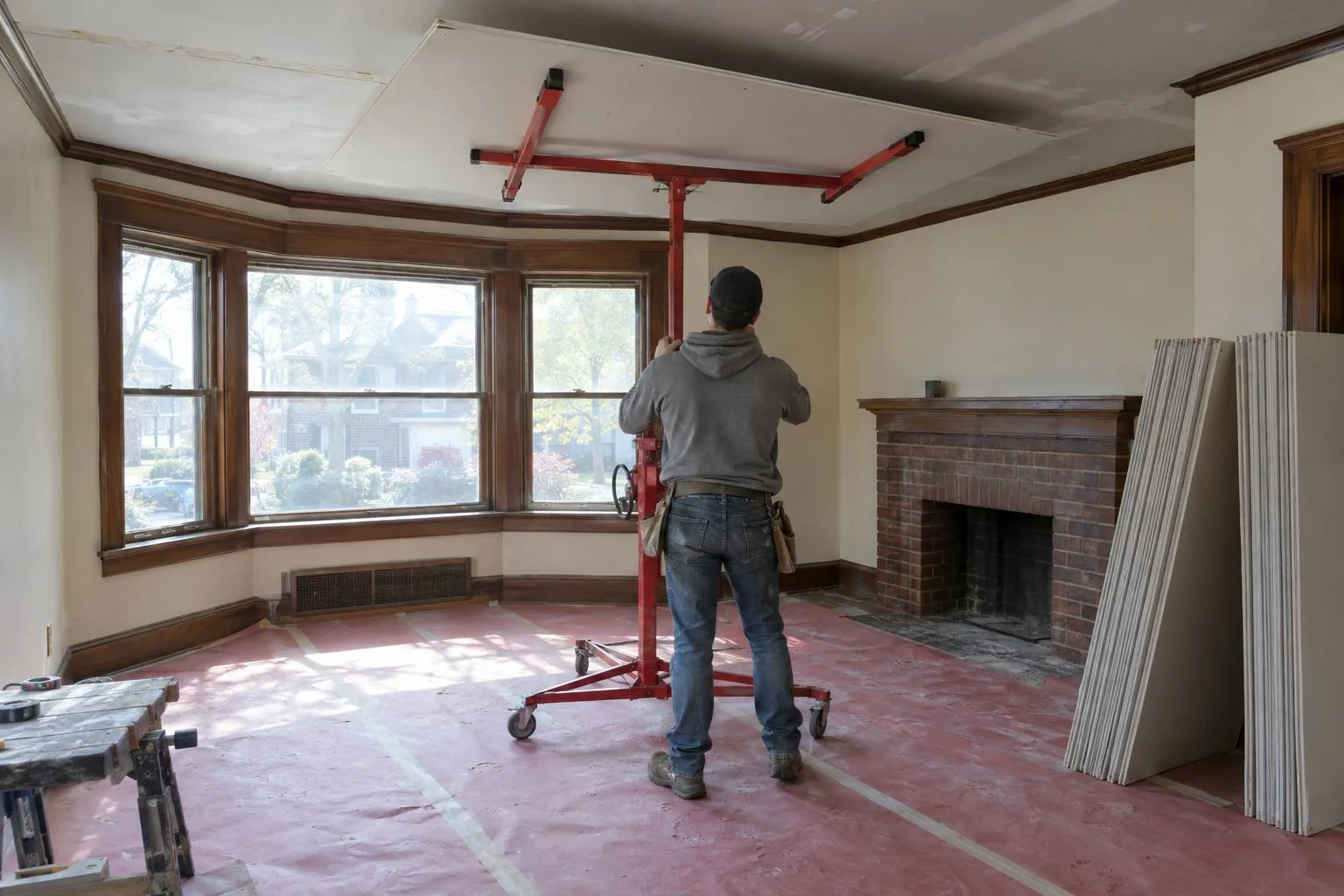
New rooms, additions, finished basements and whole-house remodels start with board on the studs. We hang, tape, mud and sand walls and ceilings, and a single room takes about 2 to 3 days from the first sheet to the finished surface. Moisture-resistant board goes where a basement calls for it. The estimate counts the openings for doors, windows and outlets and names the board, so the price matches the room you are building. Closets, hallways and ceilings are measured on the same visit.
Nail pops, hairline cracks, doorknob holes and sections cut out for a plumbing repair get the same treatment. Backing goes in where the hole needs it, a patch is cut to fit and compound is feathered past the edge so the repair disappears under paint. Each coat of compound has to dry before the next, so a repair runs as short visits on either side of the drying. Texture is matched last, whether the wall is smooth, orange peel or knockdown. A repair done early also stops a small crack from running the length of a seam.
Offices, retail suites and restaurants need partitions and ceilings hung to plan. We hang and finish commercial drywall, including Type X fire-rated board, and price each job as a bid. Floor area, partitions, ceiling grid work and inspection scheduling all move the number, so the bid lists the scope before the first sheet goes up. Work is sequenced around the other trades on site, and walls are finished before the painters arrive. Commercial spaces need clear access for deliveries and inspectors, so the bid also lists how the work is staged and where the dust is contained.
Drywall Finishing
Taping, mudding and sanding decide how a wall looks under paint. A Level 4 finish puts two coats of compound over flat joints, one over angles and three over every fastener, and it suits flat paint and light texture. A Level 5 finish finishes with a skim coat over every square inch of the wall, which is the right choice under gloss paint, dark paint or strong side lighting. The estimate names the level, so the finish you are quoted is the finish you get. Most living rooms, hallways and bedrooms need Level 4, while a wall with a window beside it or a long run of dark paint is where Level 5 earns its price.
Popcorn Ceiling Removal
Popcorn texture is common in homes built before the 1990s. Asbestos was banned in popcorn texture in 1973 but may have been used into the early 1990s, so a professional test comes first. When the ceiling tests clean, we scrape it, repair the surface underneath and finish it smooth or re-texture it. Covering a popcorn ceiling is priced as a separate job and often costs less than removing it. Asbestos abatement is specialty work, and we refer it to an abatement firm. If the test is positive, the ceiling stays untouched until that firm has cleared it, and we return to repair and finish the surface afterward.
Water Damage Drywall Repair
After a leak is fixed and the wall has dried, we cut out the ruined board and replace it. Drywall that stains again after drying, bubbles, warps, sags, smells musty or turns soft has to come out. The new board is taped, sanded and textured to match the wall around it. We do not extract water, remediate mold or hang board over an active leak, because those are different trades and the wall has to be dry before it is closed.